So, picking the right Food Paper Bag supplier in 2026? It’s not just about who gives you the lowest price. Global buyers really need to dig into material quality, print accuracy, factory capacity, food-contact paperwork, and whether deliveries actually show up on time. A good supplier should offer kraft paper bags that don’t soak through oil, keep their shape, and still work when you’re moving them around. Honestly, the little things matter. Weak handles snap. Bad folds leak. And inconsistent sizing? That can throw off a busy takeaway counter fast.
Packaging sustainability expert Dr. Susan Selke once said, “A package must protect the product before it can be called sustainable.” That line pretty much sums up how to look at suppliers. Recycled content, water-based inks, responsible forestry certifications—all great. But they can’t make up for poor performance. Ask for samples from companies like Mondi, Huhtamaki, Novolex, and Smurfit Westrock. Their ranges and regional strengths are pretty different, so don’t assume one size fits all.
This guide compares leading Food Paper Bag suppliers for restaurants, supermarkets, bakeries, and food delivery brands. We look at customization, minimum order quantities, export experience, quality control, and how quickly they communicate. Factory scale alone doesn’t tell the whole story. A smaller supplier might be more flexible, while a bigger producer may give you steadier global capacity. That trade-off is worth thinking through.
No supplier is perfect. Even solid factories run into seasonal delays, paper shortages, or artwork mistakes. So confirm every spec in writing, and test bags with real food. A pretty sample can still let you down in daily use. The best choice is the one that balances protection, looks, cost, and responsibility you can actually measure.
What Are Food Paper Bags and Why Do Global Buyers Need Them?
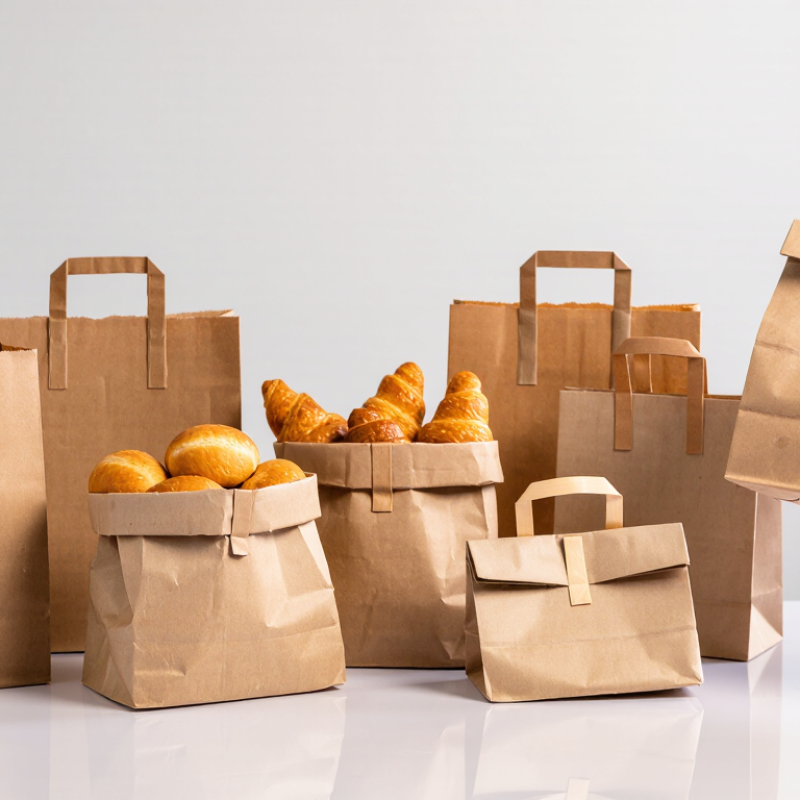
Food paper bags are disposable packaging made mainly from kraft or bleached paper. They may include flat handles, twisted handles, gussets, windows, or grease-resistant inner layers. Their structure must match the product. A bakery bag needs different protection from a bag carrying hot takeaway food.
Global buyers need these bags for practical, commercial, and environmental reasons. They support portion control, easier carrying, and cleaner product presentation. Paper also fits many retail sustainability goals, but it is not automatically suitable for every food application. Moisture, oil, heat, storage humidity, and transport pressure can weaken the bag. A common purchasing mistake is judging quality by appearance alone. A strong-looking bag may still leak or tear at the handle. Product testing, food-contact documentation, ink safety, and adhesive specifications should be reviewed before ordering. Requirements also differ between destination markets, so universal compliance should never be assumed.
Tips: Request samples first. Test them with the real food, temperature, and carrying weight. Check bag dimensions, paper strength, coating performance, and packaging cleanliness. Ask for batch controls and traceable material records. Small details matter. I would also question overly perfect promises. Reliable suppliers explain limitations clearly and suggest practical adjustments when a design needs improvement.
Which Types of Food Paper Bag Suppliers Serve International Markets?
International buyers usually work with several types of food paper bag suppliers, not one universal source. Paper bag manufacturers produce standard kraft sacks, takeaway bags, and flat-bottom formats at scale. They often provide production records, food-contact declarations, and batch traceability. This matters when customs officers or quality teams request evidence. Their strength is consistency. Yet, large minimum orders can strain smaller importers.
Custom converters suit buyers needing printed sizes, handles, grease-resistant layers, or special closures. They can match a sample and adjust paper weight after filling tests. A reliable converter should explain ink migration controls, coating materials, and sealing performance clearly. Ask for pre-production samples. Stock distributors serve restaurants and regional wholesalers that need quick delivery. They usually offer common sizes, fewer design options, and simpler order planning. Their warehouses can reduce transit risk, although storage conditions still deserve inspection.
Sustainable packaging specialists focus on recycled fibers, compostable structures, and reduced-material designs. However, environmental claims need test reports and market-specific documentation. A certificate alone does not prove suitability for every food contact application. Export trading suppliers may combine sourcing and logistics, helping buyers consolidate orders across factories. Their value depends on transparent factory information and honest lead-time updates. Sourcing teams often see attractive quotations change after artwork approval. That uncomfortable gap deserves attention. Buyers should compare moisture resistance, pallet loading, payment terms, and after-sales response—not only the quoted food packaging bag price.
2026 Best Food Paper Bag Suppliers for Global Buyers
The chart compares common supplier types serving international buyers by five practical capabilities:
custom printing, private-label production, flexible order quantities, food-contact compliance support,
and export logistics. Scores are capability benchmarks rather than company rankings or market-share data.
How to Evaluate Food Paper Bag Materials, Designs, and Customization
Choosing a food paper bag supplier starts with the material, not the printed artwork. Ask whether the paper is suitable for direct or indirect food contact. Kraft paper offers a natural look and useful strength. Recycled content can support sustainability goals, but its quality may vary. Check basis weight, fiber consistency, moisture resistance, and grease performance with actual samples.
Design details affect daily usability. A flat handle suits lightweight bakery items, while a twisted handle feels stronger for takeaway meals. Test the bag with warm food, condensation, and uneven weight. Printing should remain sharp without strong odors or visible ink transfer. Request production samples before approving large quantities. I have seen attractive bags fail at the folded base. Appearance is not enough.
Tips:
Compare three samples under the same conditions. Measure tearing, leakage, odor, and handle comfort. Ask for food-contact documents, test reports, and batch-control procedures. Confirm the supplier can match color and dimensions consistently. Custom sizes may reduce material waste, but they can raise minimum order quantities. Delivery claims also deserve evidence, such as a clear production schedule. One detail is easy to miss: storage conditions. Paper absorbs humidity, so packaging and warehouse control matter. Some designs look perfect in dry offices, yet soften during transport. That weakness should be discussed openly before selection.
What Certifications and Safety Standards Should Suppliers Meet?
Global buyers should assess more than a supplier’s price or attractive Box Paper Bag design. Food-contact compliance must come first. Suppliers should provide ISO 22000 or HACCP-based food safety controls, plus documented GMP procedures. BRCGS Packaging Materials certification can strengthen factory oversight, but certification alone is not proof of every bag’s safety.
Ask for migration-test reports covering the intended food, temperature, and contact time. In the United States, materials should meet applicable FDA 21 CFR requirements. In Europe, suppliers should follow Regulation (EC) No 1935/2004 and related GMP rules. Testing should examine inks, adhesives, recycled fibers, heavy metals, mineral oils, and PFAS. The European Food Safety Authority’s scientific work continues to highlight chemical migration as a food-packaging concern.
Details matter. A supplier should identify the paper grade, coating structure, production site, and batch traceability. FSC or PEFC certification supports responsible fiber sourcing, but it does not replace food-contact testing. UNEP’s 2023 report estimates that more than 430 million tonnes of plastic are produced annually, increasing pressure for credible fiber-based alternatives. Smithers’ packaging market research also shows sustained growth in paper-based packaging demand. Yet paper is not automatically safer. A failed grease barrier can stain food, weaken handles, and create hygiene risks. I would request recent laboratory reports, not recycled certificates. Suppliers should also explain complaint handling and recall procedures in plain language. Small gaps remain possible. That deserves honest review.
What Shipping, Sourcing, and Communication Factors Affect Global Orders?
Global buyers should judge a Tote Paper Bag supplier beyond unit price.
FAOSTAT reported global paper and paperboard production above 400 million tonnes in 2022. That scale does not guarantee consistent bag quality. Ask for recent material specifications, handle strength results, moisture controls, and batch records. A supplier should explain whether recycled fibers, virgin fibers, or a blend is used. I have seen small differences in paper humidity cause wrinkled bags after ocean transit. Packaging details matter.
Shipping can quietly change the final cost.
UNCTAD’s Review of Maritime Transport 2024 reported that maritime trade reached about 12.3 billion tonnes in 2023. Port delays, container shortages, and route changes still affect delivery planning. Request a written lead-time split: production, inspection, booking, sailing, and inland delivery. Confirm carton dimensions and pallet counts before ordering. Otherwise, freight quotations may look attractive but fail at loading.
Communication needs measurable checkpoints.
Share approved artwork, handle length, paper weight, tolerance limits, and carton photos. Request pre-production samples and inspection images before dispatch. The World Bank’s 2023 Logistics Performance Index shows that customs and shipment reliability remain uneven across markets. A responsible supplier should provide commercial invoices, packing lists, and origin details promptly. English emails alone are not enough. Misunderstandings happen. A shared specification sheet, updated after every change, is safer than relying on conversation.
Conclusion
This guide to the 2026 best Food Paper Bag suppliers helps global buyers understand how paper bags support safe, practical, and sustainable food packaging. It explains the main supplier types, including manufacturers, custom packaging specialists, and international distributors, while outlining how to assess paper quality, strength, grease resistance, printing, handles, sizes, and other customization options. Buyers will also learn why food-contact certifications, hygiene controls, traceability, and responsible material sourcing are essential when selecting a supplier.
The article also presents a practical framework for comparing production capacity, pricing, quality consistency, minimum order quantities, and lead times. It highlights the importance of evaluating shipping methods, export experience, packaging protection, communication efficiency, payment arrangements, and after-sales support. By reviewing these factors together, international purchasers can identify reliable suppliers that meet project requirements, maintain stable quality, and provide clear, efficient service throughout the sourcing and delivery process.


 +86-4000-808176
 cynthia@sencaiprinting.com
 +8618059761903