Looking for the perfect paper cups? Honestly, choosing the right ones can be a bit tricky, but having some expert advice really helps. Amy Johnson, a well-known figure in the packaging world, always says, “Picking the right paper cups is key to any successful event.” She really gets across the point that understanding what you need is super important.
Different occasions call for different types of cups, no doubt. For example, if you’ve got a busy café serving hot drinks all day, you’ll want something sturdy that doesn’t spill. But if it’s a picnic or outdoor event, lightweight, disposable cups are just what you need. The variety out there can be pretty overwhelming, and if you don’t pick carefully, you might end up wasting money and resources.
Also, don’t forget to think about what the cups are made of. Some are eco-friendly, which is great if you're into sustainability, while others have plastic linings that might be better for durability but aren’t exactly eco-friendly. Understanding these little differences can really help you make smarter choices. In the end, it’s all about finding paper cups that fit your needs without sacrificing quality or Mother Earth. Easy, right? Well, almost!
Understanding the Different Types of Paper Cups Available
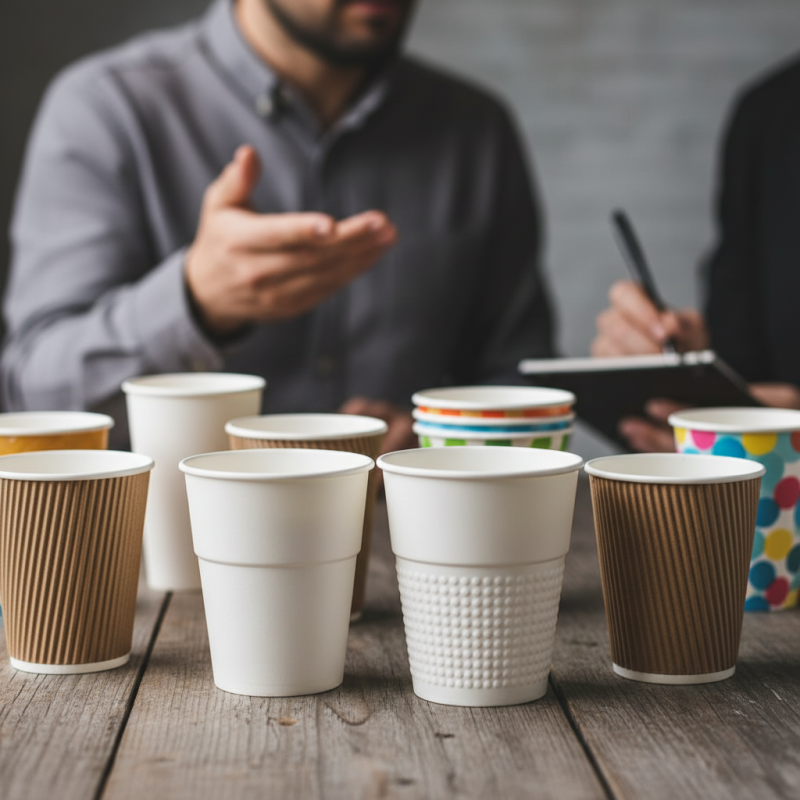
When selecting paper cups, it’s essential to understand the variety available. Paper cups come in several types, each designed for specific uses. There are single-wall cups, often used for cold drinks. These are lightweight and cost-effective, but they can leak and offer minimal insulation. Then, there are double-wall cups, which provide better heat retention. They are thicker and suitable for hot beverages. Many prefer these for coffee and tea, as they prevent burns.
Biodegradable and compostable options are gaining popularity. These cups break down over time, making them eco-friendly choices. However, their durability can be questionable when filled with hot liquids. Another consideration is the size of the cups. Standard sizes range from 8 ounces to 20 ounces. Choosing the right size is crucial for customer satisfaction. Too small and you risk complaints; too large can lead to waste. Remember, not every cup works for every drink. It’s important to reflect on the specific needs of your business or event.
Comparison of Different Types of Paper Cups
Factors to Consider When Selecting Paper Cups for Specific Beverages
Choosing the right paper cup is essential for any beverage service. Different drinks require different types of cups. For hot beverages, look for cups with insulation. They should keep the drink warm and your hands safe. Some Disposable Paper Cups have double-walled construction. This helps prevent burns, but not all double-walled cups are created equal. If you're unsure, order samples to test.
Cold drinks need a different consideration. Look for cups that can handle condensation without leaking. Not all disposable paper cups have the same water resistance. Check the specifications before making a choice. You don't want unexpected spills ruining your event. Also, consider the size. A cup too large may lead to waste, while one too small could leave customers wanting more.
It’s also worth reflecting on sustainability. Many disposable paper cups are lined with plastic, complicating recycling. This choice could affect your brand's image. Some cups claim to be eco-friendly but may not be as green as advertised. Always question the environmental impact of the products you choose. Making the right choice requires careful thought and consideration.
Evaluating Paper Quality and Environmental Impact in Cup Selection
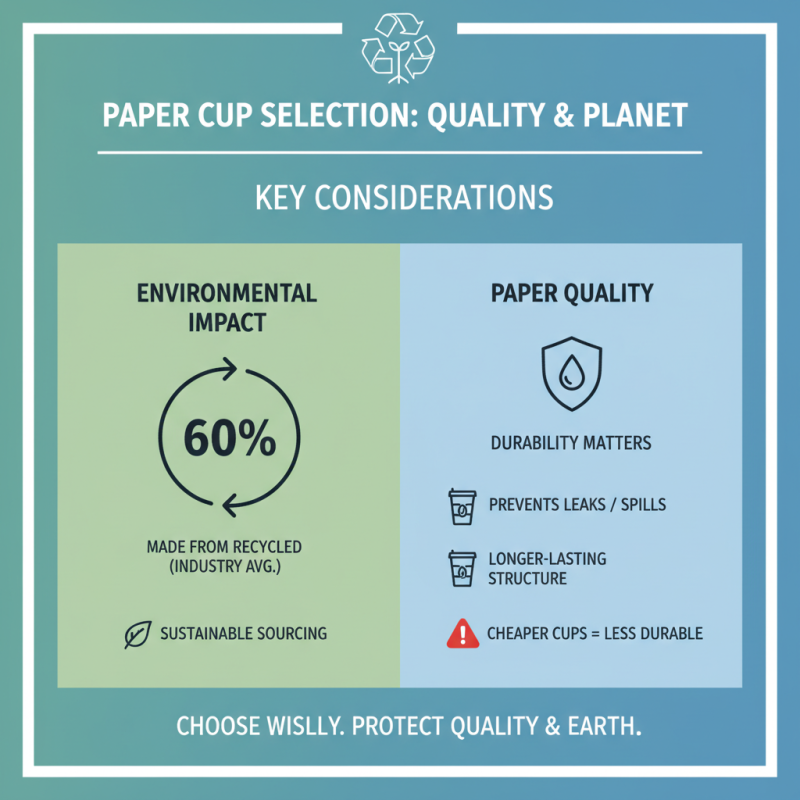
When selecting paper cups, evaluating paper quality and environmental impact is crucial. Many companies use paper generated from sustainable sources. According to industry reports, approximately 60% of paper cups are made from recycled materials. However, not all cups are equal in terms of quality. Cheaper cups may lack durability, resulting in leaks or spills.
Remember, the choice of paper affects environmental footprints. Some cups are coated with plastic, making them non-recyclable. A study found that about 30% of paper cups still end up in landfills instead of being recycled. This emphasizes the importance of selecting cups that are not only functional but also eco-friendly.
Tips: Look for cups labeled as compostable. Choose those certified by environmental organizations. Test the strength before purchasing in bulk to avoid waste. Quality matters to enhance user experience. Recognize that while many cups are marketed as eco-chic, the reality can be mixed. Research is key to making informed decisions in a crowded market.
Assessing Size and Capacity Options for Your Paper Cup Needs
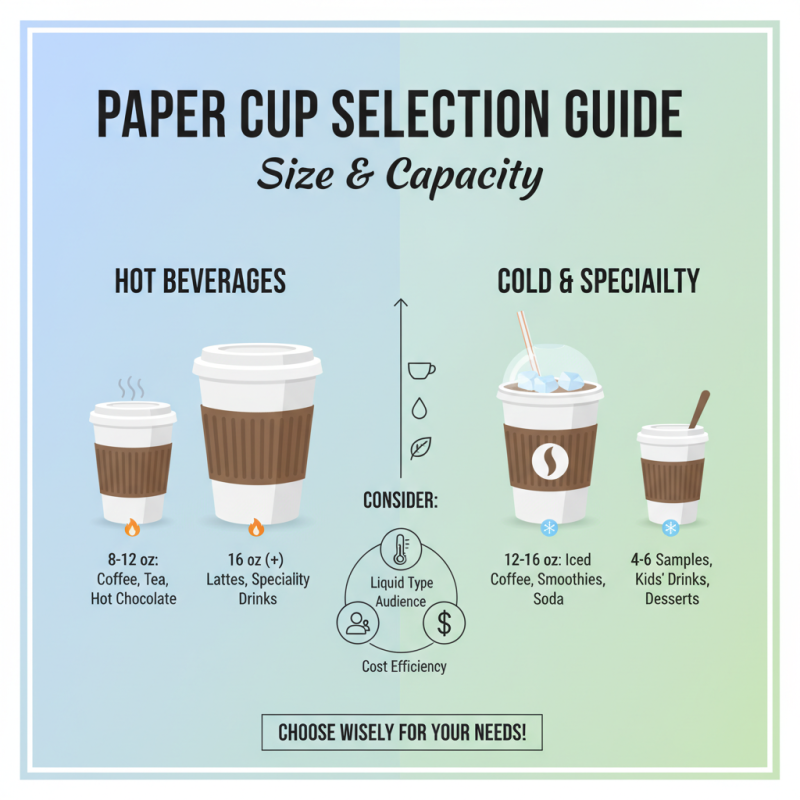
When selecting paper cups, size and capacity play a crucial role. Consider the type of drinks you will serve. For hot beverages, like coffee and tea, you might need cups that can hold heat well. Standard sizes range from 8 oz to 16 oz. Larger cups are ideal for lattes or specialty drinks. Smaller sizes work better for samples or kids’ drinks.
Capacity matters too. Think about your audience. If you host events, offering a variety of sizes can cater to different preferences. Some may want a quick sip, while others prefer to indulge in a larger drink. For cold beverages, choose cups with greater capacity to accommodate ice and larger quantities. Also, consider if the cup is sturdy enough to prevent leaks. You do not want spills ruining your event.
Choosing the right size enhances the customer experience. Don’t get too caught up in the aesthetics; functionality is key. Each cup should serve its purpose effectively, especially when it comes to Hot & Cold Drink Cups. Reflect on what works best for your specific needs.
Choosing Between Disposable and Recyclable Paper Cups
When selecting between disposable and recyclable paper cups, consider their environmental impact.
Disposable paper cups often contribute to landfill waste. According to industry statistics, around
51% of paper cups end up in landfills rather than being recycled. This high disposal rate raises questions
about sustainability.
Recyclable paper cups, made with materials like
Paper Tissue Paper,
offer a green alternative. However, not all recyclable cups are treated the same. Many facilities cannot process them due to
plastic linings. Only about 10% of paper cups are actually recycled successfully.
This disparity can lead to increased environmental concerns.
Ultimately, consumers must research local recycling capabilities. A well-informed choice can help reduce waste.
Some may overlook the importance of checking whether their chosen cups can be recycled effectively.
Striking a balance between convenience and sustainability remains a challenge for many businesses and consumers alike.
Cost-Effectiveness: Budgeting for Your Paper Cup Purchases
When budgeting for paper cup purchases, cost-effectiveness is key. According to recent industry reports, the average price for a standard paper cup can range from $0.05 to $0.30 each. This variation often depends on volume, quality, and design. Bulk purchases can yield significant savings, but lower prices might mean compromising on sustainability.
A study noted that more than 40% of businesses reported overspending due to a lack of proper planning. This often results in purchasing more cups than needed, leading to waste. Focusing on your actual needs is crucial. Consider how many cups you utilize in a month. This figure can inform your purchasing choices.
Also, keep an eye on environmental impact. Sometimes, cheaper options are less eco-friendly. Striking a balance between cost and sustainability is essential. A report highlighted that consumers are willing to pay about $0.10 to $0.15 more for environmentally friendly products. Understanding this trend can optimize your budget while aligning with market demands.
Customizations and Branding Options for Paper Cups
When considering paper cups, customizations play a significant role. Designs can vary widely, from colors to logos. A bright cup can capture attention. Simple designs often communicate the message effectively. However, too much clutter can confuse customers. It’s crucial to find a balance that reflects your brand's identity.
Branding options are essential for creating a memorable experience. Custom text can add a personal touch. Customers love cups that feel unique. Incorporating elements like sustainable materials can also enhance your brand’s appeal. Yet, not all options are feasible for every budget. Sometimes, choices can lead to mismatches in audience expectation.
Thinking ahead is key. You may want to consider pairing your cups with
Tissue Paper Tissue Paper
for added value. This combination can elevate any beverage service. But, can you afford that extra cost? Reflect on what truly resonates with your customers and focus on quality.
Innovative Customizable Tissue Paper Packaging: Elevating Your Brand Experience
In today’s retail landscape, creating a memorable unboxing experience is crucial for brand loyalty and customer satisfaction. Innovative customizable tissue paper packaging plays a significant role in this process, allowing brands to elevate their packaging aesthetics while being environmentally conscious. According to recent industry reports, over 60% of consumers consider sustainability an important factor in their purchasing decisions. This statistic highlights the need for businesses to rethink their packaging choices, opting for solutions that align with consumer values.
Sencai tissue paper packaging stands out by providing a completely plastic-free option that is not just eco-friendly but also user-friendly. Made from high-quality materials, it enhances the overall customer experience. The use of eco-friendly inks means that brands can maintain vibrant designs without compromising their commitment to sustainability. Furthermore, offering customizable options allows businesses to showcase their unique branding, reinforcing brand identity from the very first interaction. Research indicates that nearly 70% of customers are more likely to repurchase from brands that offer personalized and thoughtful packaging.
With minimalistic designs that support clean recycling practices, brands can effectively communicate their sustainability goals to consumers who are increasingly aware of their environmental footprint. Using tissue paper as a part of the packaging strategy not only meets consumer expectations but also reflects the overall commitment to a sustainable future, ensuring that every detail, no matter how small, contributes positively to the planet.
FAQS
: Look for insulated cups. Double-walled construction helps keep drinks warm and prevent burns.
Select cups that resist condensation. Check their specifications to avoid leaks and unexpected spills.
A large cup may waste resources. A small cup could leave customers dissatisfied. Balance is key.
Not all cups lined with plastic are easy to recycle. Research their environmental impact carefully.
About 51% of disposable cups typically go to landfills. This raises significant sustainability concerns.
Many recyclable cups cannot be processed due to plastic linings. Only around 10% are recycled successfully.
Research local recycling capabilities. Know which materials can be effectively processed in your area.
Choosing less eco-friendly options can harm your brand's image. Always consider the environmental impact.
Yes, ordering samples helps assess quality and suitability for your specific event needs. Don't skip this step.
Convenience and sustainability often conflict. Reflect on your choices to achieve the best outcome.
Conclusion
Choosing the best paper cups involves understanding the various types available, as each type serves different beverage needs. It is essential to consider factors such as the specific beverage being served, which can influence the choice of cup type and material. Evaluating the quality of paper and the environmental impact is also crucial, as consumers increasingly prioritize sustainability.
Size and capacity options must align with your requirements, whether for coffee, cold drinks, or other beverages. When selecting paper cups, deciding between disposable and recyclable options can further enhance your environmental commitment. Additionally, budgeting for paper cup purchases while exploring cost-effectiveness is vital. Lastly, consider customizations and branding options that can help promote your business while providing functional products to your customers.



 +86-4000-808176
 cynthia@sencaiprinting.com
 +8618059761903